

Choosing ACCA online classes while based in Zimbabwe involves more than comparing advertised lecture hours. Test whether you can access the lessons on your actual device, understand the teaching and obtain the feedback you need. Online tuition access does not confirm a remote exam option.
A provider outside Zimbabwe may offer a suitable course, but verify its actual terms for your location. This guide provides a comparison process without assuming a local ASA branch, ranking unverified schools or promising uninterrupted connectivity.
Try the demo in your normal study conditions
Use the device and connection you expect to rely on. Watch part of a lesson, pause it, take notes and attempt a short task. Record whether the audio, display and explanation are usable without repeated interruptions.
If you need access across more than one device, ask about restrictions. Confirm whether lessons can be revisited and whether any offline access is actually provided. Do not assume a feature exists because another platform offers it.
Translate the timetable explicitly
Request the live-session times together with their stated time zone. Convert them for your own calendar and confirm the interpretation with the provider when necessary. Mark work, travel and household commitments before accepting a live timetable.
Where recordings are offered, ask when they become available and how long access lasts. A recording can recover a missed explanation, but independent practice still requires time in the week.
Check how feedback works
Ask which question types receive feedback, how work is submitted and whether marking is included. Ask what happens when you do not understand the feedback or miss a submission date.
Test your learning after the demo by attempting a question without copying the solution. If you can follow a lecturer but cannot answer independently, use that result to ask about targeted support rather than selecting only on price.
Compare written access terms
Record the paper, syllabus period, variant, teaching language, access duration and included services. Request the current tuition charge and payment recipient. Read any transfer, deferral or refund conditions before paying.
Treat a promised feature as unconfirmed until the provider supplies the applicable details. Keep a copy of the terms with the course confirmation so your later discussion can refer to what was offered.
Keep exam arrangements separate
Check the official process for your intended exam and location. A tuition platform’s device requirements do not replace exam equipment, venue or delivery instructions. Build a separate booking checklist so a course purchase cannot be mistaken for an exam entry.
Separate the three decisions behind online study
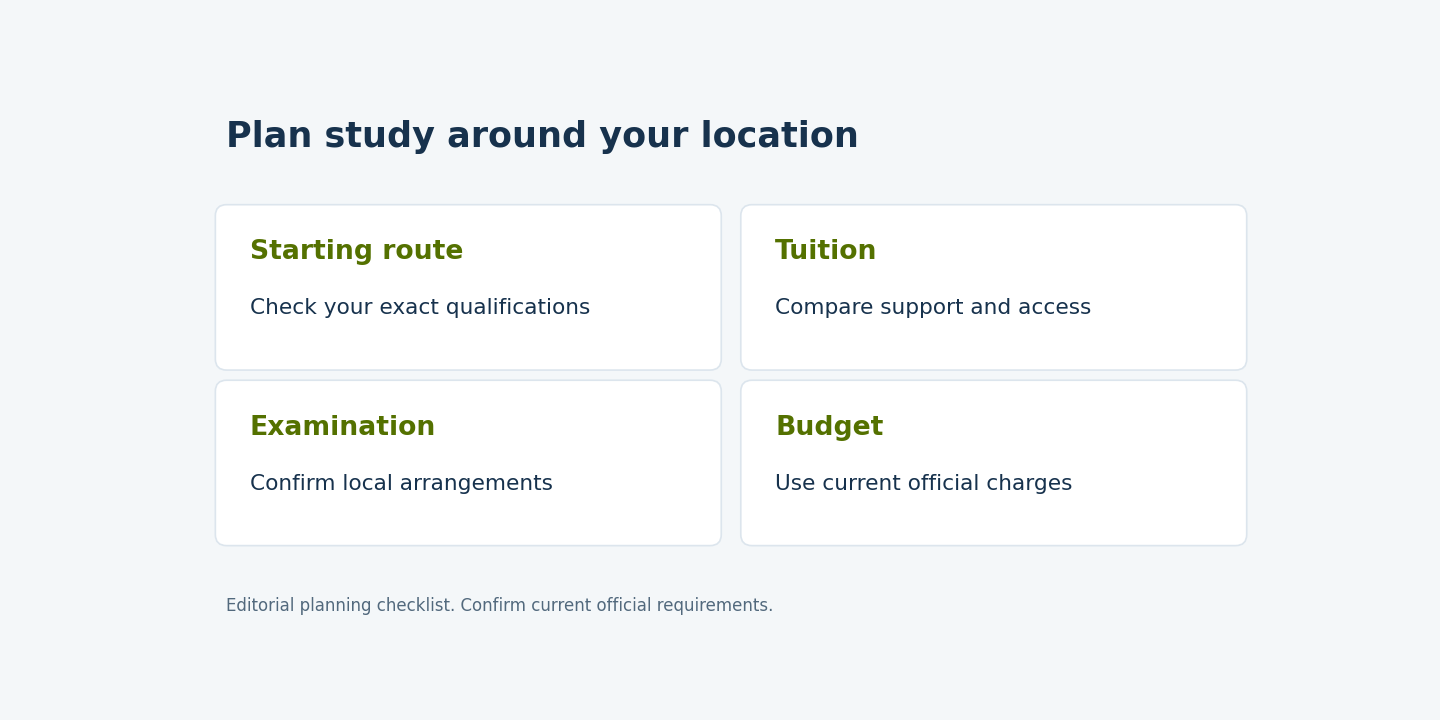
An online course enquiry often combines three different decisions: whether your qualifications permit the intended starting route, which paper you should prepare for, and whether the teaching service suits you. Resolve them in that order. A provider can explain its tuition, but your official registration and exemption position need confirmation through ACCA’s applicable process.
Once the route is clear, specify the exact paper and intended exam period. Ask about the syllabus covered by the course and any relevant variant. Then assess the delivery format. This prevents a technically attractive platform from distracting you from a course that does not match your immediate study needs. Save the written answers so the comparison can be checked later.
Run a meaningful demo test
Use a short topic with a question you can attempt after the explanation. Before the demo, write down what you currently find difficult. During it, note how the tutor identifies the principle, works through an example and explains why other approaches are unsuitable. Afterwards, close the solution and attempt a comparable task. Your own attempt tells you more than whether the presentation looked polished.
Test ordinary navigation as well. Can you locate the correct paper, reopen a lesson, see accompanying materials and find the support instructions? Try the normal study device rather than a better device borrowed only for the demonstration. If the platform supports multiple devices, ask whether simultaneous access or switching is restricted. Keep the test within the provider’s permitted account terms.
Record any problem precisely. “Video stops after ten minutes on this device” is more useful than “platform slow.” Ask the provider for its supported browsers and troubleshooting process. Do not assume the same issue occurs for everyone, or that changing providers will automatically solve a problem caused by your device or connection.
Compare live and recorded delivery against your week
Live teaching may offer a scheduled routine and opportunities to ask questions, depending on the actual course format. Recorded delivery may allow more control over timing. Neither label establishes the amount or quality of feedback. Ask how questions are handled in the specific package rather than inferring support from the delivery label.
For a Zimbabwe-based student attending a cross-border course, ask for the session time and time zone in writing. Put converted times into your calendar alongside work or college commitments. If recordings are included, ask when they appear and whether access extends through revision. Do not plan around a recording that has not been confirmed.
Test the weekly workload too. A convenient lecture time can still leave no room for independent questions. Allocate time for watching or attending, attempting work, checking errors and requesting help. The Zimbabwe study-planning article provides a separate planning method.
Find out what “support included” actually means
Ask which channel accepts questions, who responds, whether responses follow a stated service schedule and how complicated questions are escalated. A group discussion channel is different from individual marking. A revision session is different from regular review of your written attempts. Record these as separate services so the course description remains clear.
If marking is offered, ask which tasks qualify, how many submissions are included and what feedback looks like. A useful sample can show whether comments address reasoning and presentation as well as the final answer. Ask what happens if the same concept remains unclear after feedback, and whether any additional session would carry a separate charge.
Do not submit identity documents or payment details through an informal group merely because it is used for academic questions. Use the provider’s confirmed registration and payment process. Keep academic enquiries focused on the paper, task and explanation needed. This also helps the tutor understand the problem without unnecessary personal information.
Plan access interruptions before they occur
If your own connection or power arrangements sometimes interrupt study, choose an appropriate backup plan based on permitted course features. Ask whether materials can be downloaded, whether videos can be accessed offline and whether missed live attendance affects access. These are questions to verify, not features this article promises.
Prepare a low-bandwidth task list where possible: reviewing notes already available to you, analysing a previously completed answer or planning the next attempt. Keep required files in a permitted, secure location. A backup list protects some useful study time, but it cannot replace an entire course or establish readiness for an exam.
For prolonged interruptions, contact the provider about its actual deferral or access-extension terms. Get the answer in writing before relying on it. An informal assurance from another student is not evidence that your package includes an extension. Examine any extra cost alongside the benefit of delaying the study schedule.
Check payment and access documentation
Request the current tuition quote, currency, included services, payment recipient and receipt arrangements. Ask whether materials, revision or marking are separate purchases. If the payment crosses borders, check applicable conversion and transaction charges with the payment service you will use. Avoid treating a converted illustration as a fixed course quote.
Write down the access start and end dates. Ask whether access begins on purchase, on the first class or on activation. Read the cancellation, transfer and refund terms that apply to the actual package. Keep the offer and confirmation together so you can identify a discrepancy promptly rather than reconstructing the agreement from messages later.
Frequently asked questions about ACCA online tuition
Does buying online tuition book my exam?
No. Treat tuition and official exam entry as separate processes. Check the official booking instructions for the intended paper and location. Record the booking confirmation separately from the tuition receipt. A provider may explain the process without being responsible for submitting your entry.
Can online tuition guarantee an ACCA pass?
A course cannot establish your result in advance. Assess teaching, practice opportunities and feedback, then review your own independent performance. A pass-rate advertisement also needs context about the cohort, period and measurement before it can inform a comparison.
Should I buy several papers together?
Only after checking the official progression position, workload and access terms. A package discount is less useful if you cannot study the included papers within its access period. Compare the complete commitment with a smaller purchase and ask what happens if your intended schedule changes.
What should I include in an ASA enquiry?
State that you are studying from Zimbabwe, identify your intended paper and exam period, and describe your preferred timetable and teaching language. Mention the device you plan to use and whether you need marked feedback. Ask ASA to confirm available services and terms before deciding; the article itself is not a course quotation.
Discuss your next step with ASA
For the wider route and study picture, read the ACCA in Zimbabwe guide. Explore Abeel School of Accountancy and ASA courses. Ask ASA about tuition with your qualifications, intended paper, location, preferred teaching language and available study hours. Confirm the actual course format and access conditions; this article does not imply a physical ASA branch or exam venue in Zimbabwe.
Sources reviewed 13 October 2026: ACCA exam availability and booking. Planning examples are editorial suggestions, not guaranteed exam, employment or licensing outcomes.
More ACCA planning guides for Zimbabwe
- ACCA Entry Requirements in Zimbabwe: Check Your Exact Qualification
- ACCA Fees in Zimbabwe: Build a Budget You Can Update
- ACCA Exemptions in Zimbabwe: Check Your Programme Before Skipping Papers
- ACCA Modules in Zimbabwe: Turn the Qualification Structure into a Paper Plan
- Choosing ACCA Tuition in Zimbabwe: An Evidence-Based Comparison Worksheet
- Becoming an ACCA Member in Zimbabwe: Track Exams, Ethics and Experience
- ACCA Careers in Zimbabwe: Compare Roles Using Real Vacancy Evidence
- ACCA Study Planning in Zimbabwe: Build a Week That Includes Question Practice
- Is ACCA Worth It in Zimbabwe? Compare Cost, Time and Career Fit