

An ACCA exemption decision in Zimbabwe should follow an official assessment of your prior learning. It should not follow a general claim that every accounting graduate skips the same exams. Similar programme names can conceal differences in institution, assessed content and completion period.
Use ACCA’s current exemption guidance and calculator. Confirm the relevant institution, qualification and study details, and keep the actual result with your records. Entry eligibility and exemptions are related planning questions, but they are not interchangeable decisions.
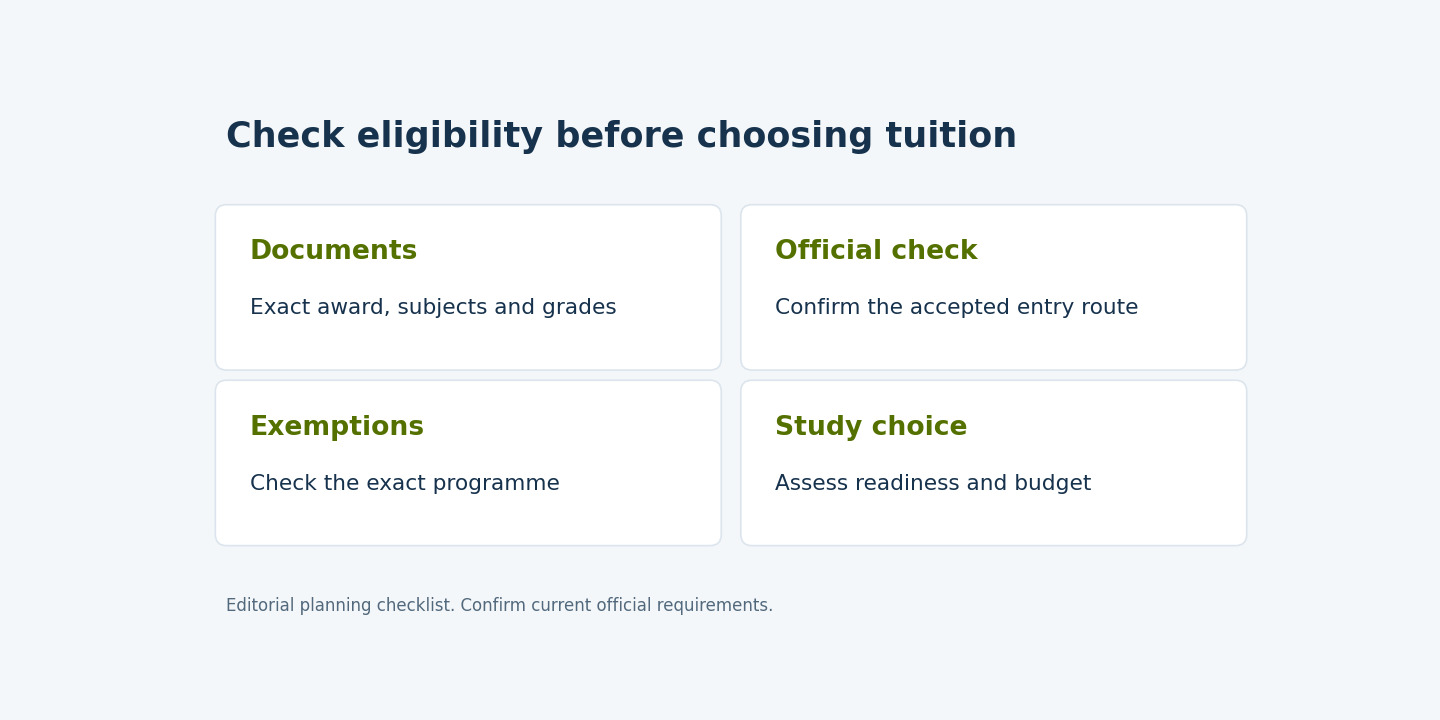
Gather the details before searching
Write the official institution name and full qualification title from your documents. Record your completion year and retain the transcript. If the programme was delivered through another institution or partnership, clarify which award was actually granted.
Search carefully and check the returned programme instead of accepting the closest name. If the exact course cannot be matched confidently, use the official assessment or support route. Do not invent an equivalent programme to obtain a preferred result.
Separate possible credit from awarded credit
A general indication can help you plan questions, but it is not the same as the exemptions recorded for your student position. Mark unconfirmed exemptions as pending in your paper plan.
This protects you from buying tuition for the wrong stage or planning an exam sequence around a decision that has not been made. It also helps a tutor explain which background knowledge should be revised before more advanced work.
Compare the learning consequences
An exemption may remove the need to sit a particular exam while leaving a need to refresh the knowledge that supports later study. Try a diagnostic question on the relevant foundation area and review the reasoning, not only the final answer.
For example, a student confident with degree lectures might still need practice interpreting unfamiliar exam requirements. Use that result to plan revision rather than automatically assuming an exemption establishes complete readiness for the next paper.
Check charges and conditions
Read the current exemption fee and any applicable conditions before accepting a decision or changing it. Keep tuition charges separate. Seek official clarification if a deadline or payment requirement is unclear.
A provider’s admission discussion can help organise your questions, but it should not replace the exemption decision. Retain the written outcome and update your exam list only when the position is confirmed.
Make a post-decision study plan
List the exams remaining, the knowledge you want to refresh and the first realistic tuition choice. Discuss the course syllabus and access conditions with a provider. Build in independent question practice so your progression is based on what you can demonstrate.
Discuss your next step with ASA
For the wider route and study picture, read the ACCA in Zimbabwe guide. Explore Abeel School of Accountancy and ASA courses. Ask ASA about tuition with your qualifications, intended paper, location, preferred teaching language and available study hours. Confirm the actual course format and access conditions; this article does not imply a physical ASA branch or exam venue in Zimbabwe.
Sources reviewed 13 October 2026: ACCA exemption guidance. Planning examples are editorial suggestions, not guaranteed exam, employment or licensing outcomes.
ACCA exemptions in Zimbabwe: two practical checks
Compare the exact programme, not only the university name
Imagine two graduates from the same institution: one completed a different award in a different year. Their starting information is different, so neither should copy the other’s exemption plan. Record the institution, course and graduation year before using the official ACCA exemption guidance. Retain the search result and any outstanding document request with your own study record. This fictional example illustrates a checking process, not an exemption decision.
Separate a possible exemption from a confirmed study plan
Build two short budgets while the outcome is unresolved. One includes tuition for a paper you may need to study; the other records the applicable exemption charge and the preparation needed for later papers. Label both provisional. Before paying a provider, confirm whether its transfer or refund terms address your situation. An estimate from a tutor does not replace an official decision, and a class starting soon does not settle an unresolved eligibility question.
More ACCA planning guides for Zimbabwe
- ACCA Entry Requirements in Zimbabwe: Check Your Exact Qualification
- ACCA Fees in Zimbabwe: Build a Budget You Can Update
- ACCA Modules in Zimbabwe: Turn the Qualification Structure into a Paper Plan
- ACCA Online Classes in Zimbabwe: Test Access, Timing and Feedback Before Enrolling
- Choosing ACCA Tuition in Zimbabwe: An Evidence-Based Comparison Worksheet
- Becoming an ACCA Member in Zimbabwe: Track Exams, Ethics and Experience
- ACCA Careers in Zimbabwe: Compare Roles Using Real Vacancy Evidence
- ACCA Study Planning in Zimbabwe: Build a Week That Includes Question Practice
- Is ACCA Worth It in Zimbabwe? Compare Cost, Time and Career Fit