

Use earlier learning as a starting point, not a blanket exemption
A learner in Mozambique may bring school, university or workplace accounting knowledge to ACCA. Begin by documenting what that learning actually involved. Entry and exemptions depend on the official assessment of the relevant qualification and programme; practical familiarity with a topic is a different question. Keep both visible. One helps establish the formal route, while the other helps decide how much revision you need before attempting the next paper.
Translate concepts through a worked explanation
Where earlier study used Portuguese or another language, choose a familiar transaction and explain it in English using your own words. Include the accounting issue, the treatment and the reason. Then compare your explanation with the relevant study guidance. This exercise shows whether the gap is technical understanding or the ability to express it clearly. Avoid translating a long model answer word for word: a correct answer needs to respond to the particular requirement and facts.
Give each study period a measurable output
A useful session can end with a corrected reconciliation, a short written explanation or an independently completed calculation. Watching a lesson is an input; being able to use it is the output you should review. Keep a record of errors and identify what to practise next. If you are studying alongside work, choose smaller tasks you can complete consistently rather than building a timetable around unusually long sessions that rarely happen in an ordinary week.
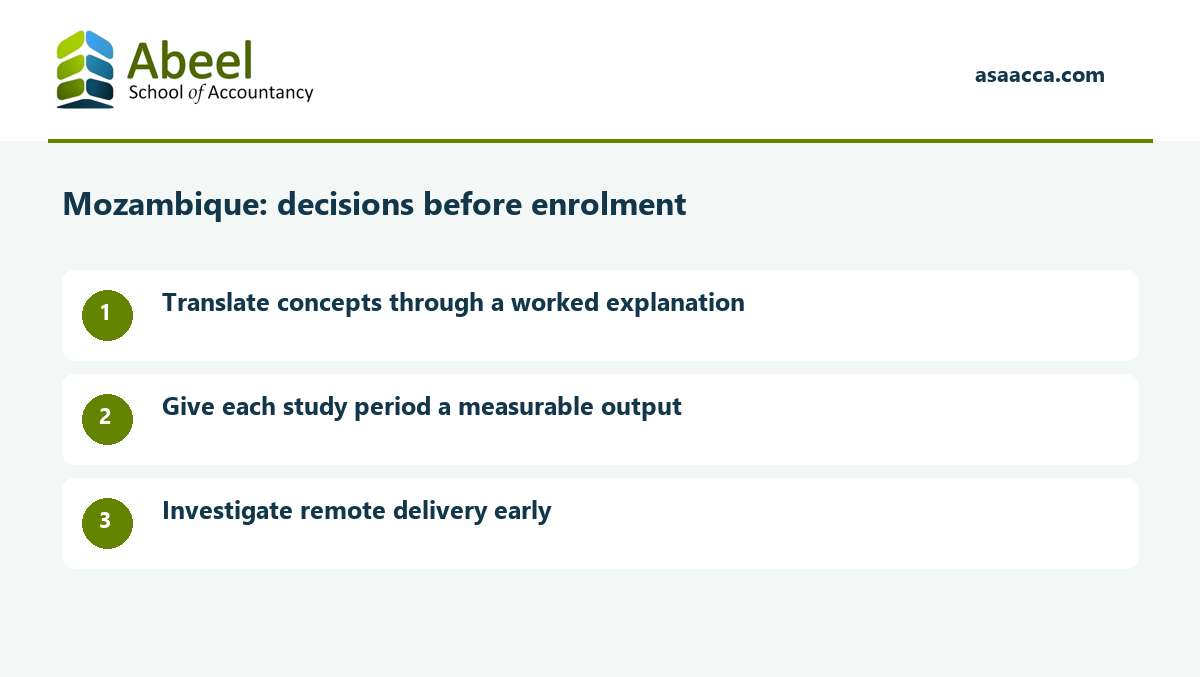
Investigate remote delivery early
The reviewed ACCA examination-availability information lists remote options for Mozambique. Follow the current official link for your intended qualification and paper, including the required pre-booking checks. Course access and examination delivery can have different device and environment requirements. Test the actual setup specified by the examination provider and resolve questions before booking. An article cannot confirm that your connection, room, identity documentation or equipment will meet the rules for an individual attempt.
Compare tuition by the feedback loop
When considering ASA or another learning arrangement, establish how a question moves from independent attempt to review and correction. Ask about language, access duration, revision and marking of written work. A collection of recordings may explain technical material but leave you without a route to diagnose a weak response. Use a sample lesson and a follow-up task to test whether the support fits your needs. Keep official exam fees and any equipment requirements outside the tuition comparison unless expressly included.
Bring the plan together before paying
Your final worksheet should show your confirmed entry or credit position, the next paper, the current exam-delivery route and the learning support you intend to use. Attach the source of each decision rather than relying on memory. If one part remains unresolved, identify who can answer it and whether it affects a purchase. Use the foundational links below for the broader qualification and practice method; use official ACCA information for current entry and examination arrangements.
Build on the ACCA foundations
Official references for this guide
Bridge Portuguese study habits and English accounting responses
A learner may understand an accounting idea when it is explained in Portuguese but struggle to express the reasoning in an English examination answer. Address the two tasks together. Study a short explanation, identify the accounting decision, and then write the reasoning using the terms in the requirement. Compare meaning before polishing grammar. Build a glossary containing full example sentences rather than one-word translations alone. This helps prevent a familiar translated term from concealing a difference in context. Ask a teacher to identify whether an error is technical, linguistic or a combination of both.
Run official equipment checks before selecting a remote sitting
Where remote assessment is currently available for the intended paper and location, follow the official equipment and environment instructions closely. Check the specific device and connection you will use, not a borrowed setup that will be unavailable on the day. Investigate identification requirements and the conditions for the room. Keep technical preparation separate from course enrolment: a provider may supply online lessons without controlling the assessment platform. If any required condition remains uncertain, ask official support for guidance rather than assuming that a successful lesson stream means the examination setup will work.
Choose an affordable sequence rather than an all-inclusive guess
Separate the first application decision from the cost of the entire qualification. Record official charges in their stated currency and compare tuition using written descriptions of what is included. Add equipment or connectivity needs where they apply to your own arrangements. Do not present a single converted total as if it will remain valid for every student and every sitting. A staged budget lets you see which expense is confirmed and which depends on a future decision. It also makes it easier to postpone a paper responsibly without abandoning the longer-term professional objective.
Use feedback to distinguish knowledge from expression
After a practice attempt, ask for a diagnosis of one or two important weaknesses rather than a general judgement that the answer needs improvement. If the principle is wrong, return to the concept and try a different example. If the principle is sound but the explanation is unclear, rewrite the answer more directly. If you answered a different question, practise identifying command words and requirements. This targeted approach makes feedback usable. It also prevents the student from spending an entire week rewatching lessons when the real difficulty is interpreting or communicating the response.
Investigate career requirements independently of the qualification
When considering a future role, read what the employer actually requests and distinguish professional study from local employment or practice requirements. A course can help build accounting knowledge; it cannot make an individual decision about every job or regulated activity. Record any question about recognition or professional rights and take it to the responsible authority. Present your current stage accurately in applications, including whether you are studying, have completed examinations or have been admitted to membership. Clear descriptions are more useful than broad claims that a qualification automatically guarantees a particular position.