

Combining ACCA with a B.Com programme in India needs two connected plans: the degree requirements set by your university, and the ACCA route applying to your own prior learning and registration. Similar subject names do not automatically mean that one set of requirements replaces the other.
Start with the exact B.Com institution, programme and study period. Use ACCA’s official exemption process where relevant and retain the actual outcome. A claim about another university or completion year is not an exemption decision for your course.

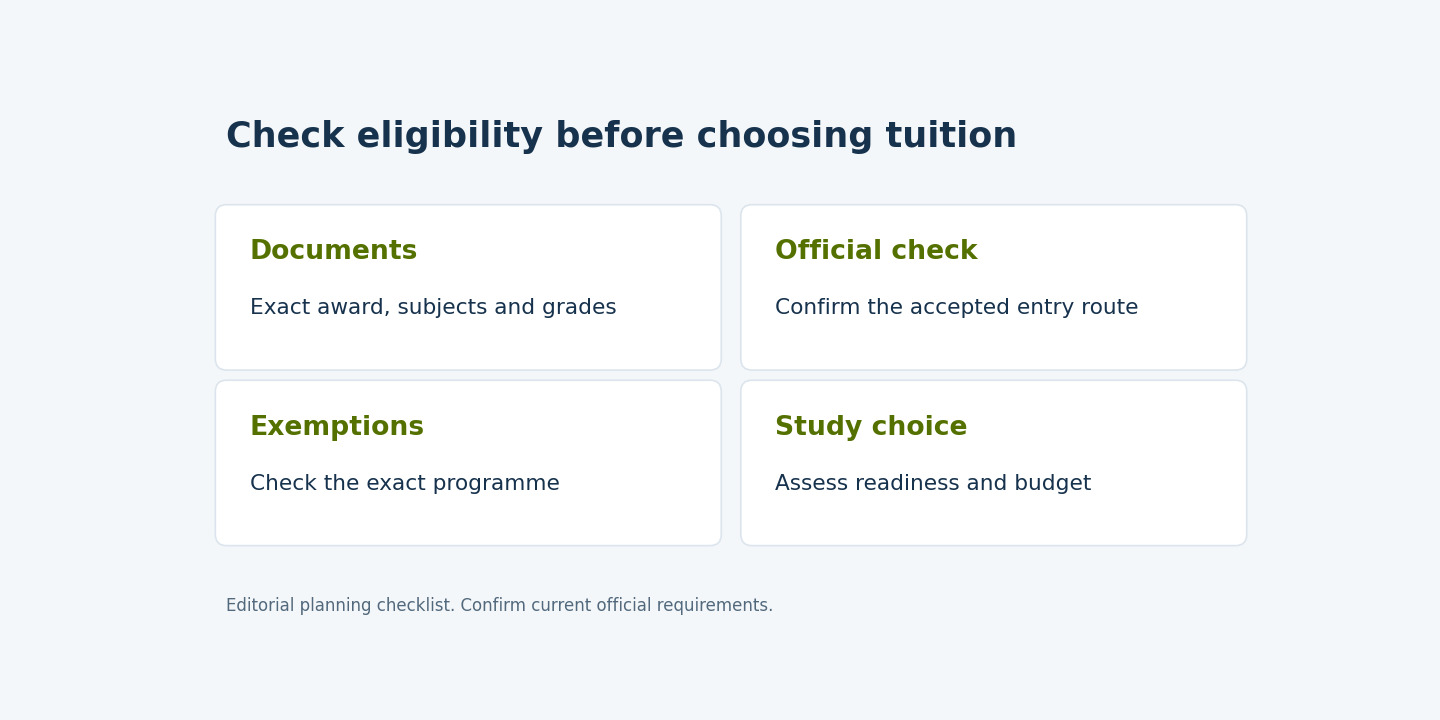
Put college commitments on the calendar first
Record lectures, assignments, internal assessments and examination periods. Identify weeks in which the degree workload becomes unusually heavy. Add ACCA sessions only after the existing commitments are visible.
Use separate tasks for learning and practice. If a college topic appears to overlap with an ACCA area, test the overlap with an independent exam-style question. Understanding a classroom explanation may not cover every way an unfamiliar requirement is assessed.
Record the exemption position precisely
Keep possible exemptions, requested exemptions and confirmed exemptions in separate fields. Use the exact institution and programme entry rather than selecting the closest title in a database.
If your degree is unfinished, ask which current route and process apply to that position. Do not present a projected graduation date or an expected mark as a completed award. Obtain any applicable guidance directly and update the record when your position changes.
Identify the learning that still needs work
A formal exemption and a confident understanding of the underlying content are different questions. Use a short diagnostic exercise to identify gaps that could affect the next paper. Rebuild the weak area before increasing the workload.
For example, a learner comfortable preparing a calculation may still need practice explaining a conclusion. Allocate a task specifically for the explanation and seek feedback on that task, rather than replaying every lecture indiscriminately.
Compare a lighter and heavier paper load
Write two calendar versions. In each, include independent questions, marking, review and recovery time. Test what happens when a college assessment occupies the weekend you intended to use for revision.
Choose the version you can normally sustain. A lighter plan which includes completed practice can be more informative than a heavier plan measured only by purchased courses and available videos.
Keep tuition and exam entry separate
Before choosing tuition, confirm the paper, syllabus period, variant if applicable and access duration. Ask which support is included and how to obtain feedback. Check official exam availability and booking conditions separately before making an exam commitment.
Ask ASA about a suitable course
Explore Abeel School of Accountancy and ASA course options. Contact ASA with your location, qualifications, chosen paper, preferred teaching language and weekly study availability. Confirm the actual course access and delivery terms before paying. This guide does not establish a local ASA branch or exam centre. For the broader country picture, read the ACCA in India guide.
Official sources reviewed 13 October 2026: ACCA exemption guidance; ACCA tuition options. Examples and worksheets are original editorial guidance. Local availability, fees and individual eligibility must be confirmed through the applicable official process.
Build a two-calendar plan before selecting a paper
A B.Com student should keep the university calendar and ACCA preparation calendar visible together. The university controls its lectures, attendance requirements, assignments and assessments. Your ACCA study plan must fit around those actual obligations. Similar accounting topics may help you learn, but they do not make two assessment systems interchangeable. Start with the confirmed dates and identify weeks that cannot support an additional heavy workload.
Use one colour for compulsory college activity and another for independent ACCA practice. Mark assignment preparation separately from the submission date: the deadline is one moment, but the work needed can occupy several evenings. Add travel, work and family commitments before deciding how many study sessions remain. This reveals practical capacity instead of treating every hour outside lectures as available study time.
A fictional semester with competing deadlines
Meera is a fictional B.Com learner in India who wants to add ACCA study during a semester. She first records her university’s actual assessment dates and checks the starting route and exemption questions relevant to her programme. She then compares a tuition timetable with the hours she can protect. The example is a planning exercise, not a real ASA testimonial or an official academic outcome.
Her first draft timetable includes lessons but no independent questions. She improves it by allocating a separate question-practice session and an error-review session. When a college assignment needs more time, she moves one planned task into a recovery slot instead of leaving it indefinitely unfinished. She also reduces the next week’s workload rather than promising to recover every missed task in one evening.
At the semester review, Meera compares practice completed with hours planned. She finds that understanding a lecture is easier than explaining a fresh requirement. Her next provider question concerns marking and feedback, rather than buying another lecture package immediately. A workable plan responds to evidence from actual study, not simply to an optimistic list of future subjects.
Use a programme-specific exemption record
Keep the exact institution, programme title and relevant completion information together when investigating exemptions. A promotional statement about a different college or cohort should not be treated as your own decision. Use ACCA’s official process and retain its actual outcome. If information is unclear, ask a focused question identifying your programme rather than assuming every course called B.Com attracts the same result.
Keep university academic requirements separate. An ACCA exemption outcome does not tell you whether your university accepts additional credit, changes attendance rules or permits an assessment substitution. Ask the institution responsible for that decision and retain the response. Do not merge two favourable statements from different organisations into a broader promise neither organisation made.
| Decision | Organisation or evidence | Record to keep |
|---|---|---|
| Degree obligations | Your university’s current programme requirements | Attendance, assessment and submission instructions |
| ACCA entry | Official guidance matching your documents | The relevant route and any clarification |
| Exemptions | Your actual programme assessment | Confirmed outcome, not a maximum advertised number |
| Tuition access | The provider’s written course terms | Paper, timetable, feedback and access duration |
Make subject overlap useful without assuming equivalence
When a topic appears in both courses, compare what each assessment asks you to do. One task may emphasise a definition while another requires analysis or application. Write a short note explaining the connection and the difference. Use the overlap to refresh concepts, but still practise requirements in the format relevant to the examination you intend to sit.
Try a fresh question after reviewing the shared topic. If the method is familiar but the requirement is difficult to interpret, ask for help with application. If you recognise terminology but cannot explain the reasoning, practise writing the explanation in your own words. Avoid measuring progress only by how many familiar headings appear in both syllabuses.
Compare providers using your semester constraints
Request the exact paper, syllabus period, teaching timetable and access duration. Ask whether missed lessons have recordings and how written answers are marked. A student with compulsory daytime classes may value flexible access, while a learner who struggles with application may need detailed feedback. Compare the support described with your actual difficulty.
For a live course delivered from another country, confirm the local start time in India. Test the platform and device you will use for practice as well as lectures. Read transfer or deferral conditions before paying, particularly when university deadlines could change the plan. This article does not establish a physical ASA branch or a university partnership in India.
Review the plan at three practical checkpoints
Review before enrolment, after two ordinary study weeks and when the university assessment timetable becomes clear. Before enrolment, verify the intended paper and the course terms. After the trial period, compare actual practice with planned sessions. When college demands increase, decide which tasks can realistically remain in the timetable and which require a revised academic plan.
At each checkpoint, record the next action. A useful action is specific: attempt a fresh requirement, request feedback on an explanation or confirm the course’s recording-access period. “Study harder” does not identify what needs to change. A small clear action is easier to carry out and review than a promise to catch up on every unfinished chapter immediately.
Frequently asked questions about ACCA with B.Com
Do all B.Com programmes give the same exemptions?
Do not assume an identical outcome. Identify the actual institution, programme and relevant dates, and retain ACCA’s official decision for your record.
Does an ACCA exemption change my university obligations?
Ask your university about its own rules. An ACCA decision should not be treated as permission to miss college assessments, change attendance or substitute a degree requirement.
Should I select several papers at once?
Base the decision on the required papers, academic deadlines and dependable practice time. Test a manageable workload first rather than choosing a large package solely because its headline price appears attractive.
What can I ask ASA about?
Use the existing article enquiry form to describe your programme, current ACCA stage, intended paper and available hours. Ask about teaching format and feedback. For the country overview, read the main ACCA in India guide; for teaching information, visit the ASA home page. Official exemption and university decisions remain with the relevant organisations.