

Considering ACCA after Class 12 in India requires a qualification check before a course purchase. The title Class 12 does not establish every subject or grade condition. Use ACCA’s current entrance database and compare the exact award, results and subject combination shown on your documents.
ACCA’s database distinguishes Standard X from qualifying higher-secondary routes and provides conditions for the relevant Indian awards. Read the full applicable row rather than assuming that completing any school course establishes direct entry. If the match is unclear, request confirmation through the official registration process.
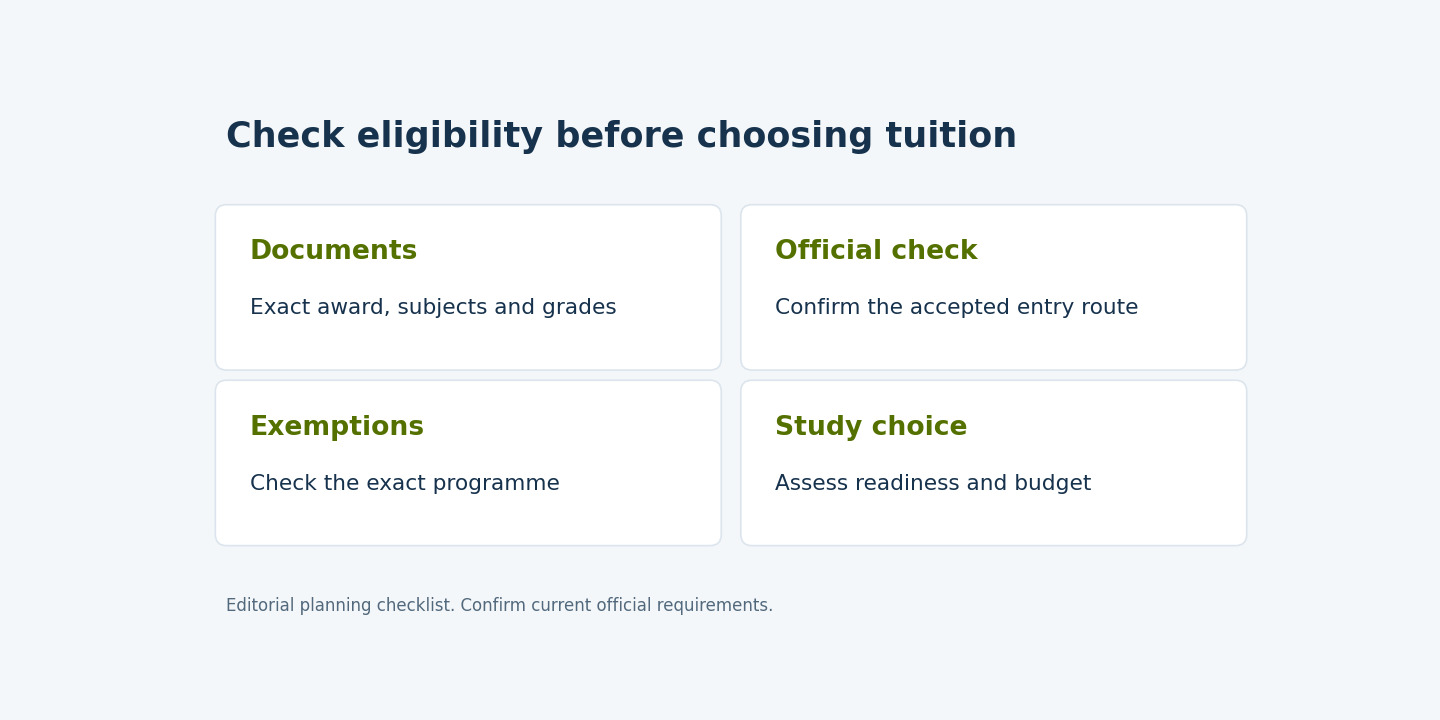
Build a document checklist
Gather your certificate and detailed marks statement. Record the awarding board, examination name, year and subjects. Check that your name and other required details are consistent across the documents you intend to use.
Where grades are represented differently, ask how the official requirement applies to your particular award. Do not use a conversion invented from another board’s example. Mark any question which needs a response before finalising the starting route.
Separate entry from exemptions
Direct-entry eligibility is not a blanket exemption from exam papers. If you have additional relevant study, use the exemption process with the exact institution and programme details. Do not assume that a degree you plan to start will create exemptions before that decision has been assessed.
Keep pending and confirmed information separate in your study record. This helps a tutor discuss a suitable starting paper without basing the course recommendation on the most favourable possible outcome.
Compare ACCA with your college timetable
If you are also planning a degree, map its classes, assessments and travel first. Identify which sessions you can protect for ACCA learning and independent questions. A timetable based entirely on holiday availability may not survive the first busy college month.
Try a short accounting exercise after a demo lesson. Notice whether you can explain the method without replaying the teacher’s solution. Use the result to plan support and practice, rather than selecting a large paper load before you have tested your capacity.
Budget in separate categories
Request a current tuition quotation and the access conditions. Record external qualification charges separately using the official fees applicable to your location and position. Include the device, connectivity and any confirmed exam travel you expect to need.
If quotations use different currencies, write down the conversion date and the payment costs you have actually verified. Do not treat a rough converted total as a final invoice.
Confirm the first commitment
Before paying, explain your verified route, intended paper and available study sessions to the provider. Ask about syllabus coverage, teaching language, recordings, practice and marking. Keep the response and written terms with your study records so your next decision starts from evidence.
Ask ASA about a suitable course
Explore Abeel School of Accountancy and ASA course options. Contact ASA with your location, qualifications, chosen paper, preferred teaching language and weekly study availability. Confirm the actual course access and delivery terms before paying. This guide does not establish a local ASA branch or exam centre. For the broader country picture, read the ACCA in India guide.
Official sources reviewed 13 October 2026: ACCA minimum entrance requirements; ACCA exemption guidance. Examples and worksheets are original editorial guidance. Local availability, fees and individual eligibility must be confirmed through the applicable official process.