
One qualification journey, several different decisions
When researching ACCA in Mauritius, distinguish the learning decision from the professional-registration decision. Choosing tuition, passing professional examinations, becoming an ACCA member and meeting local requirements are connected but not interchangeable. A useful study plan names the outcome at each stage. This prevents a prospective student from interpreting a course advertisement as a promise that every later regulatory requirement has already been satisfied.
Why MIPA belongs in the conversation
The Mauritius Institute of Professional Accountants describes itself as the regulator of the accounting profession in Mauritius. Its professional-accountant registration guidance identifies ACCA among the relevant professional bodies. Read the current MIPA criteria and the applicable category before drawing conclusions about employment, professional registration or public practice. Do not assume that holding student or affiliate status is the same as holding full professional membership. If the work you intend to do requires an individual decision, ask the regulator directly rather than relying on a general blog summary.
Set out your present position accurately
List your completed qualifications and any confirmed ACCA passes or exemptions. Then record the stage you are currently at and what you still need to complete. Keep that record separate from the local professional-registration enquiry. For example, a person comparing tuition for an early paper is making a different decision from a member exploring a professional role. If you explain your status precisely, a tutor can discuss appropriate learning support while the relevant body addresses recognition or registration.
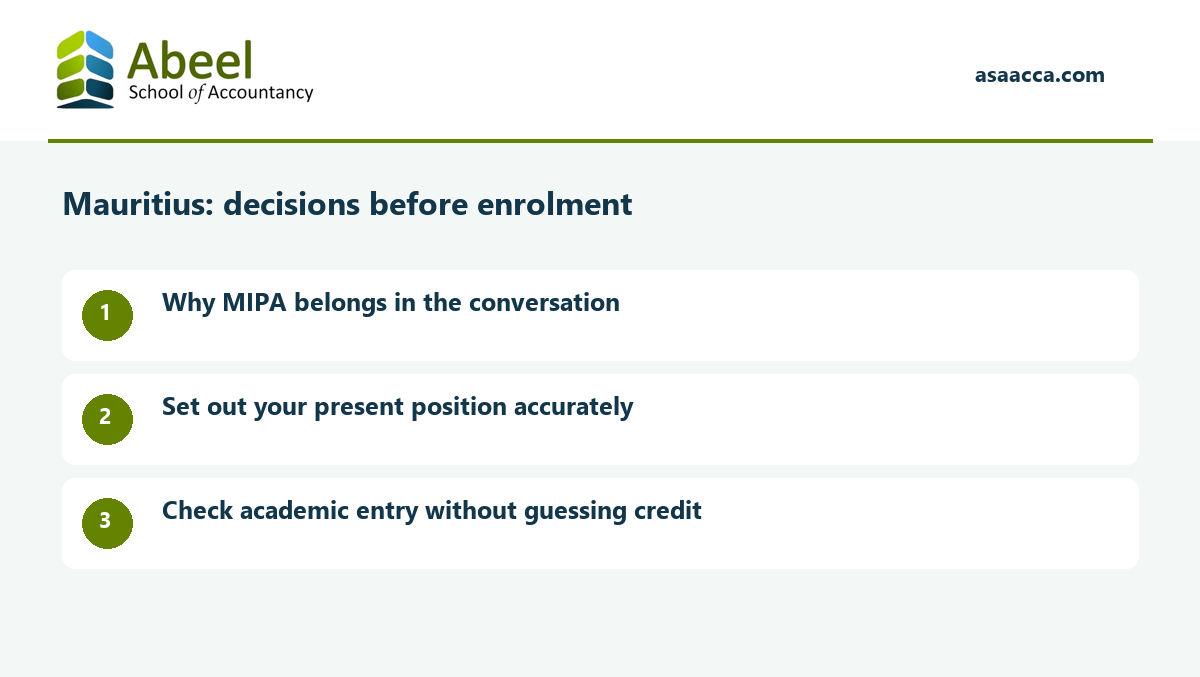
Check academic entry without guessing credit
Use ACCA’s official entrance requirements to compare the precise award you hold. If you have university study, use the exemption process for the exact institution, programme and relevant year. A degree title alone does not establish the same credit for every graduate. Obtain the official result before buying a tuition plan that assumes certain papers have been exempted. Also consider your confidence in the underlying subject: formal credit and readiness for a later paper are related questions, but they are not identical.
A tuition comparison that goes beyond video access
For a proposed course, request the paper, language, intended attempt, access period and feedback arrangements. Establish whether revision and mock review are included and how a written response will be assessed. A useful learning process moves from explanation to independent practice and then to correction. If you are studying alongside work, examine whether the proposed support is usable within your actual weekly schedule. More material is not automatically better if the plan leaves no time to work through it actively.
Document the local questions you need answered
Prepare a short list for the relevant professional body: which category applies to your status, which documents are required, whether a particular activity involves additional authorisation and which current fees apply. Keep the response with your other professional records. This is more dependable than combining statements from several old webpages into a personal eligibility conclusion. Do not submit confidential employer or client records through a public learning enquiry when you are trying to resolve a regulatory question.
Work backwards from a realistic objective
Consider a learner who wants to progress from technical study into a reporting role. The immediate study task is to choose the next appropriate paper and practise applying its concepts. The career task is to identify the responsibilities and evidence employers seek. The professional-registration task is to understand the relevant local requirements when applicable. These can be planned together without pretending that one action completes all three. Review the plan whenever your qualification status or target role changes.
Use the right foundation for each next step
Start with the ASA qualification guide if you need the overall route explained. Use the syllabus-reading guide to identify what a paper actually assesses, and compare courses only after confirming your starting point. For Mauritius-specific professional requirements, follow MIPA’s current information. Keeping those sources in their proper roles helps you ask better questions, avoid unnecessary purchases and describe your progress accurately. The linked guidance supports planning; it does not promise admission, a licence, employment or a particular salary.
Build on the ACCA foundations
Official references for this guide
- MIPA professional-accountant registration
- Mauritius Institute of Professional Accountants
- ACCA entrance requirements
Keep three different decisions in separate folders
A useful filing system separates student entry documents, evidence of progress towards ACCA membership and enquiries about local professional registration. These folders may eventually relate to the same career, but they answer different questions. An admission email does not establish that all membership requirements have been met, and a membership certificate should not be presented as a universal permission to offer regulated services. Record who provided each answer and the specific activity discussed. This makes it easier to explain your present status honestly to a prospective employer or adviser without turning a limited confirmation into a broader claim.
Plan study around a real reporting cycle
Imagine a finance employee who can study comfortably in the middle of a month but regularly works late during reporting. A flat daily timetable is unlikely to reflect that person’s workload. Instead, reserve lighter tasks such as reviewing errors for demanding workdays, and place longer question attempts in more predictable periods. Build a catch-up allowance before the examination rather than assuming every weekend will remain free. This example does not recommend a fixed number of papers: the appropriate load depends on prior knowledge, available time and the quality of practice the student can sustain.
Ask what changes after the demonstration lesson
A clear explanation in a free lesson is useful, but the paid learning arrangement needs its own checks. Ask whether the course includes marked written work, how questions are submitted and whether revision support remains available near your intended sitting. Confirm the language and format rather than relying on the course name. Request a written description of the included service before comparing prices. If a provider cannot explain how a student moves from understanding a topic to producing an examination answer, a large video library alone will not resolve that gap. Keep the decision linked to the learning task you actually need help completing.