
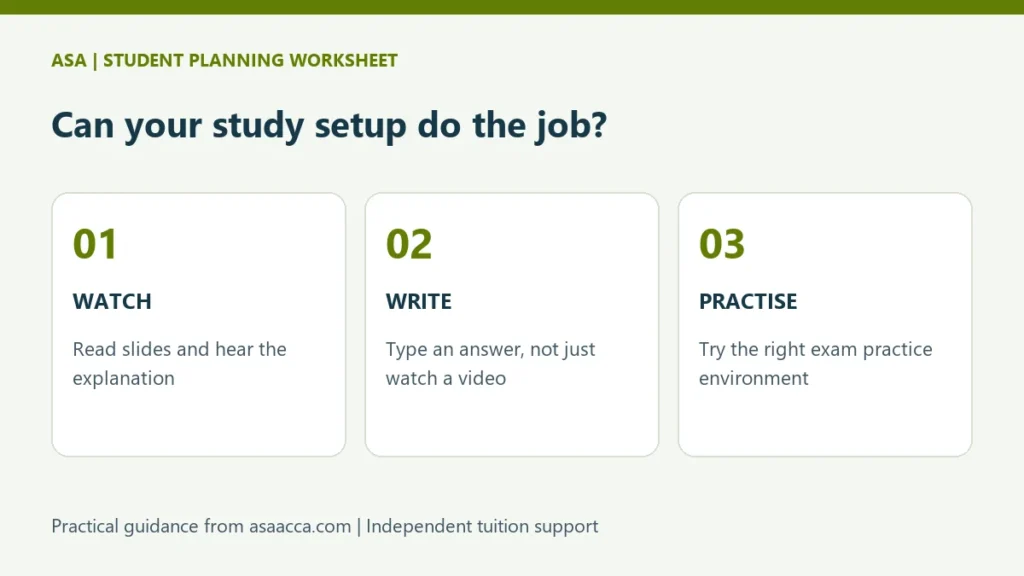
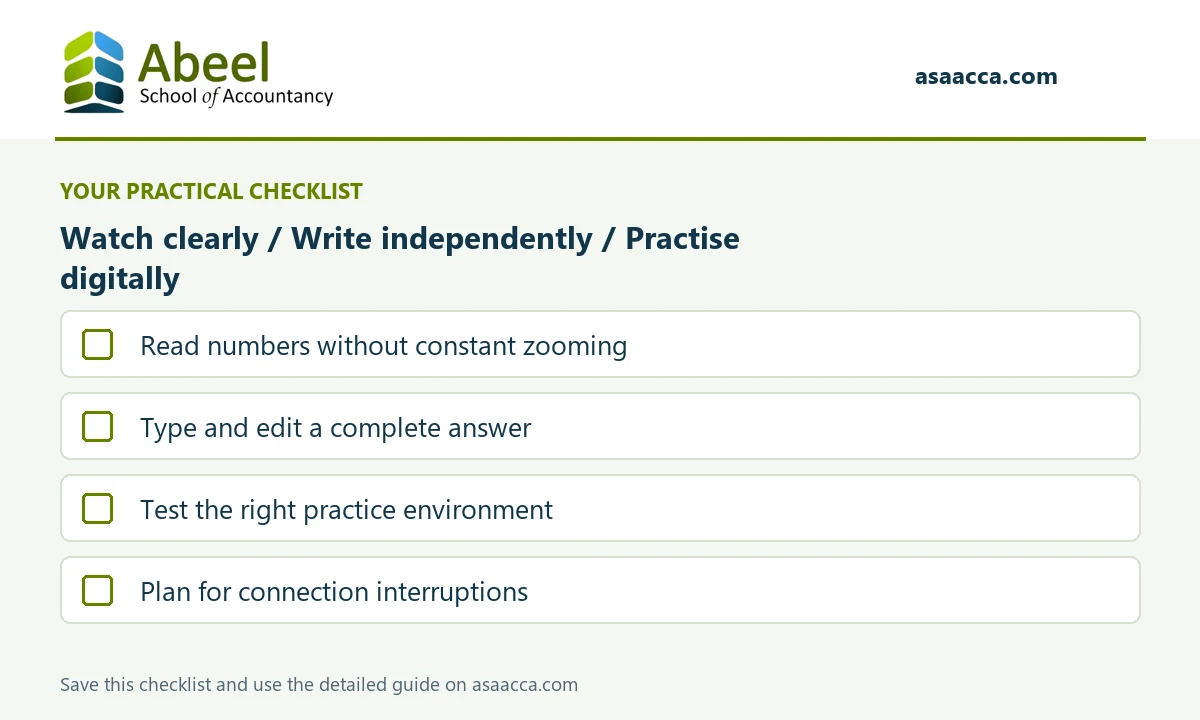
A mobile phone can be useful for ACCA lectures, short quizzes and revision, but watching on a phone is not the same as being ready for a computer-based exam. Before enrolling, test the tasks your chosen paper requires on the devices you actually have. A phone-only plan needs particular care when answers involve spreadsheets, longer written responses or detailed exhibits.
Test three activities, not just video playback
Start with one sample lesson and a question that relates to it. Watch the explanation, close the video and produce your own answer. Finally, review the answer against feedback or a model solution. If any step is uncomfortable, identify what equipment or access would improve it before paying for a full course.
| Activity | Practical test | Warning sign |
|---|---|---|
| Watch and read | Read a calculation on screen and hear the tutor clearly. | You repeatedly zoom or miss figures. |
| Write and calculate | Type an explanation and work through a calculation independently. | You can follow an answer but cannot produce one. |
| Practise exam tasks | Try the official practice environment appropriate to your paper. | You rely entirely on handwritten work for tasks you will perform digitally. |
When a larger screen makes a difference
A phone is convenient for revisiting a short explanation during a commute. A larger screen and keyboard can make it easier to compare an exhibit with an answer, edit a paragraph or inspect a spreadsheet. This is a practical study recommendation, not a claim that every ACCA course has the same hardware specification.
Ask the tuition provider whether its player, notes and live-class service work on your device. Separately, check ACCA’s official resources for the relevant exam. A tuition platform working on a phone does not establish eligibility for a remotely delivered exam or confirm any exam-day technical requirements.
Run a connection and power test
Use the connection you expect to study on, at your normal class time. Try a full sample lesson rather than a brief promotional clip. Note buffering, sound quality and whether the page resumes after a connection interruption. Ask whether recordings are available, whether downloading is permitted and when access expires; do not assume these features are included.
If you study in Pakistan, include a realistic fallback for interruptions: a charged device, an alternative connection where affordable, and an agreed catch-up slot. Do not plan around continuous access that your household cannot reliably provide.
Keep a simple readiness record
- Record the device and browser used for the demo.
- Write down one task you completed without watching the solution.
- List any access or display problem and the provider’s response.
- Decide whether you need occasional access to a computer before booking tuition.
ACCA distinguishes technical learning resources from familiarisation with the exam environment in its Study Hub FAQs. Use the official guidance alongside your course; the checklist above is an original ASA planning aid, not an official hardware standard.
A 30-minute setup trial before enrolment
Choose a quiet period that resembles your normal study time. Spend the first ten minutes watching a sample explanation and reading its accompanying figures. Spend the next ten producing your own answer. Use the final ten to compare your work with feedback and record the difficulty you encountered. The purpose is to test your process, not to earn a mock score.
Record what caused a problem: screen size, typing speed, connection quality, unfamiliar software or missing knowledge. Those require different solutions. Buying a faster connection will not correct a misunderstanding of double entry, while replaying a lesson will not make a cramped spreadsheet easier to use.
Separate mobile revision from full answer practice
A phone can be a useful companion for short recall activities, reading a note or revisiting a specific explanation. Longer answer production may need a different setup. Plan both activities explicitly so that a week full of convenient viewing does not crowd out the work that actually reveals gaps.
For example, a fictional working student could review a short concept on a phone during a break, then use an evening computer session to attempt a full requirement. The next day they might revisit the error on the phone. This is a planning example rather than a claim that one device combination suits every paper.
Keep device and access costs proportionate
Before purchasing equipment, establish what the course platform and relevant practice activities actually require. Ask whether you can test them on your current device. Occasional access to a suitable computer may solve a particular problem, but only if that access is reliable enough for your planned practice routine.
Do not assume a tuition provider permits downloading, offline viewing or unlimited devices. Ask about the specific enrolled course. A practical setup includes an access arrangement you can maintain, not just hardware that looks suitable in a product description.
Mobile-study questions students ask
Is watching every lecture enough preparation?
No. Use independent questions, feedback and later retries to judge your learning. A completed playlist is a record of viewing, not proof that you can produce the required answer.
Should I buy a laptop before trying a demo?
First test the resources and identify the actual limitation. Use the course’s information and official exam guidance to make an informed decision instead of buying from an assumed universal specification.
Can I assume a mobile-friendly course means a mobile exam?
No. The teaching service and official examination arrangements are separate. Check the delivery and requirements for your own exam through ACCA.
Choose your next step
Explore ASA’s online ACCA learning options and demo lessons using your own setup. For local entry-route and study-planning context, use the ACCA in Pakistan guide. If the test reveals a scheduling issue rather than a device issue, the working-student timetable guide can help you reorganise your week.