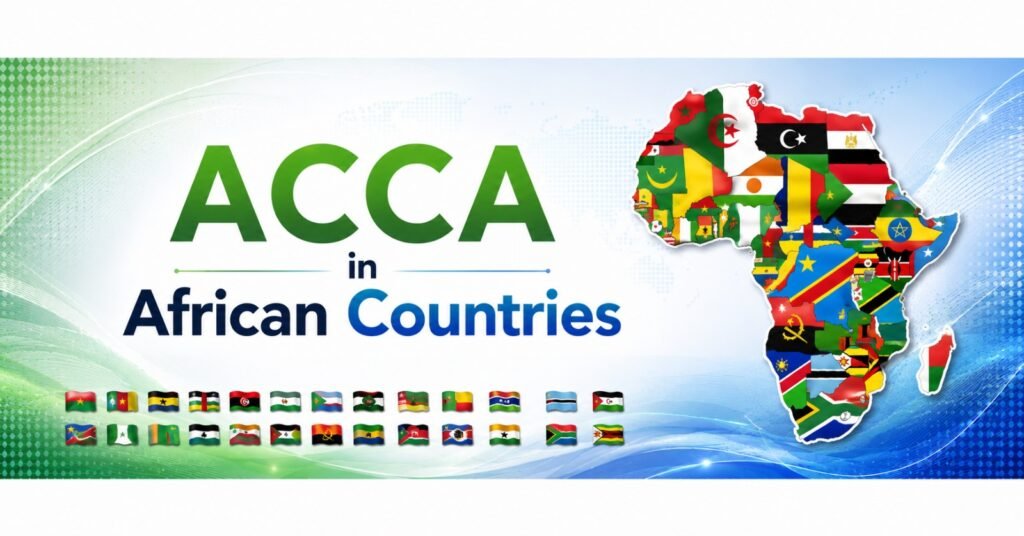
ACCA in African Countries is gaining remarkable momentum as Africa becomes one of ACCA’s fastest growing regions. It is easy to see why. Across dozens of markets including Lagos, Nairobi, Johannesburg, and Harare, businesses are expanding, financial systems are modernising, and employers increasingly seek accountants who can operate to global standards rather than purely local ones. ACCA meets this demand exceptionally well, which is why student enrolment across African countries continues to grow year after year.
At Abeel School of Accountancy, we work with ACCA students across multiple African countries, and one question comes up constantly: how does ACCA actually work across such a diverse continent, where recognition, local qualifications, and tuition quality can look completely different from one country to the next? This guide pulls that picture together, country patterns and all, so you know exactly where you stand no matter where in Africa you’re studying from.
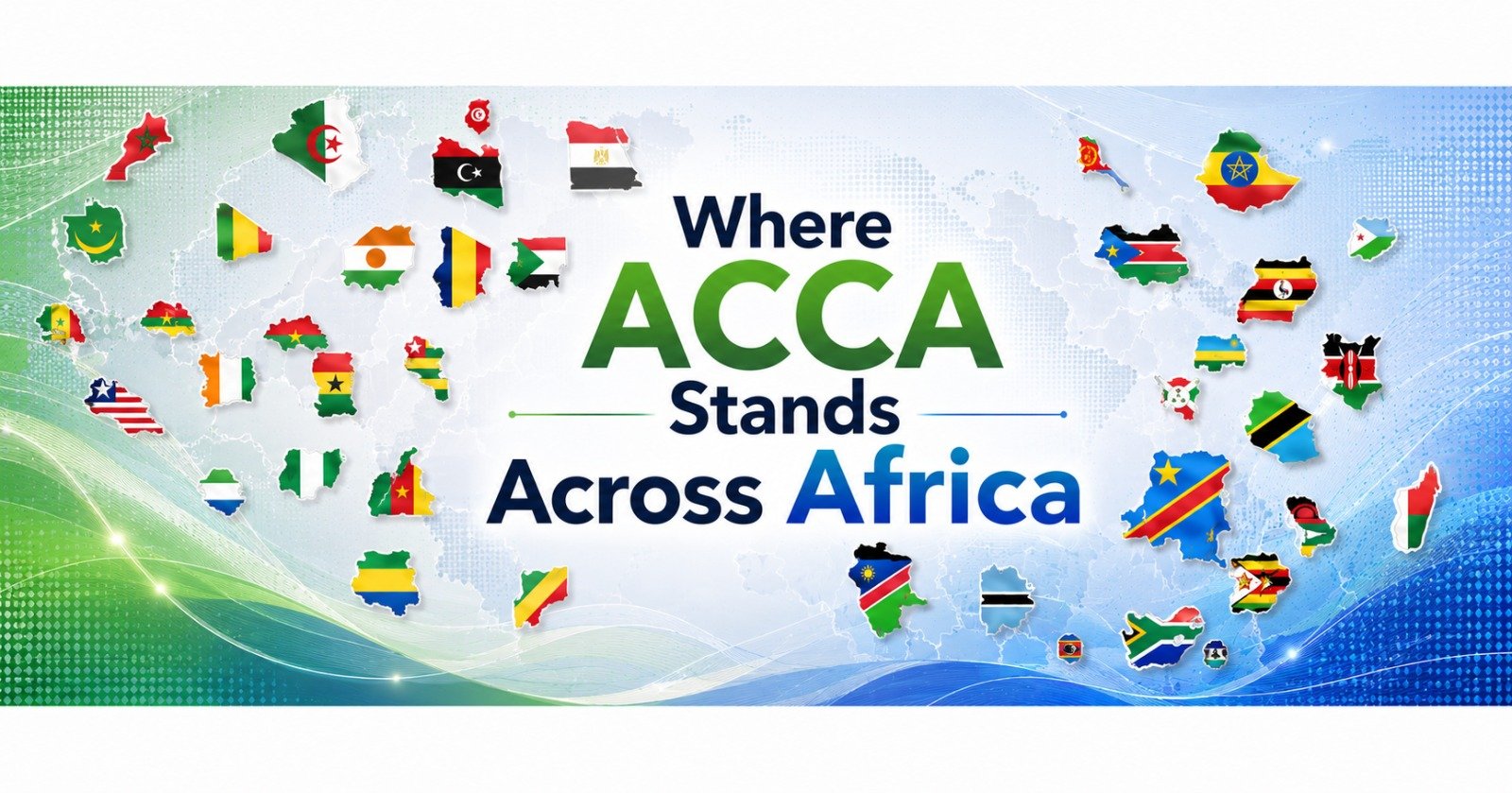
Where ACCA Stands Across Africa
ACCA’s presence across Africa isn’t uniform, and understanding that difference matters more than most students realise. Nigeria has one of the largest ACCA student populations on the continent, with strong recognition across banking, oil and gas, and the Big 4, often studied alongside the local ICAN qualification for maximum flexibility.
Kenya, Ghana, and South Africa all carry strong, well-established ACCA recognition too, with South Africa in particular offering a formal route to signing authority through arrangements with the Independent Regulatory Board for Auditors and the South African Institute of Chartered Accountants. Zimbabwe and Botswana both have supportive environments for ACCA, often studied alongside or as an alternative to their own national qualifications, while markets like Sierra Leone rely on longer-standing joint examination arrangements with their own national institutes.
The important distinction to understand here is the difference between educational recognition, employer recognition, and signing authority. In most African countries, employers, multinational corporations, and Big 4 firms accept ACCA readily for finance and accounting roles. Full signing authority as a statutory auditor, however, depends on local regulatory bodies and varies by country, so it’s always worth checking your specific market’s requirements rather than assuming recognition is identical everywhere.
Why ACCA’s Popularity Is Rising So Fast Across African Markets
The underlying driver is consistent across almost every African country: as local businesses expand internationally and multinational corporations deepen their presence, employers need finance professionals who can operate against global standards, not just local ones. ACCA delivers exactly that, alongside genuine career mobility. A qualification earned in Lagos or Freetown carries recognition in London, Dubai, and dozens of other markets, which matters enormously for students who want the option to work abroad without requalifying from scratch later in their careers.
The Common Challenge: Tuition Quality Varies Enormously by Country
Here’s the pattern we see repeated across almost every African market we work with students from. In larger economies like Nigeria and South Africa, students have access to a genuinely competitive local tuition market. In smaller or less developed markets, strong local ACCA institutes are harder to find, and students often end up relying entirely on whichever international online provider they happen to come across first, without much way to judge quality in advance.
This unevenness is the single biggest practical challenge facing ACCA students across Africa today, and it has very little to do with a student’s own ability or effort. A talented student in a smaller market can genuinely underperform, not because the material is too hard, but because the tuition available to them simply isn’t structured well enough to get them exam-ready.
Why a Consistent Online Provider Solves This Better Than Geography Ever Could
This is exactly where a well-run, live online ACCA program changes the equation for students across the continent. Instead of tuition quality being determined by which country you happen to live in, a genuinely live, interactive online class delivers the same standard of teaching whether a student is based in Harare, Freetown, Accra, or anywhere else. Recorded backups handle occasional connectivity interruptions, live sessions are scheduled to work reasonably across time zones, and the quality of the tutor stops being tied to local market size entirely.
This is precisely the gap Abeel School of Accountancy has built its African student base around. Rather than treating each country as a separate, disconnected market with wildly different tuition quality, students across Nigeria, Kenya, Zimbabwe, Sierra Leone, and beyond get access to the exact same structured, live teaching model.
How Abeel School of Accountancy Supports ACCA Students Across Africa?
Abeel School of Accountancy runs fully live, interactive classes for every paper, with every session recorded so a missed class never breaks continuity. Students get direct access to tutors for doubts, structured study material aligned to the current ACCA syllabus, and guided past paper practice built directly into the course timetable, rather than left for students to organise on their own. For a student in a market where strong local tuition simply doesn’t exist yet, this consistency is often the single biggest upgrade available to them.
The One Feature No Other Institute Offers
Abeel School of Accountancy is the only institute that runs a dedicated weekly live revision session for every paper, combined with a smart course completion system, a structure that isn’t currently offered by any other ACCA tuition provider serving students across Africa. Rather than assuming a topic is done once it’s been lectured, the completion tracker monitors genuine topic mastery based on mock exam performance, and the weekly revision session is then directed specifically at whatever the tracker shows is still weak for that student.
For students studying across markets where a local study group or nearby tutor simply isn’t an option, this structured, ongoing revision system replaces exactly the kind of support that’s traditionally been hardest to access outside a handful of larger African cities.
Career Scope for ACCA Professionals Across Africa
The range of opportunities across the continent is genuinely broad. Nigeria’s banking and oil and gas sectors, South Africa’s mining and financial services industry, Kenya’s growing banking and telecom sector, and Zimbabwe’s mining and agricultural economy all create steady demand for ACCA-qualified accountants, auditors, and financial analysts. Public sector finance roles and NGO-funded development programs, significant employers across much of the continent, also regularly recruit ACCA professionals for compliance and financial management positions.
Beyond individual countries, ACCA’s global recognition means African professionals aren’t limited to their home market. It’s common for ACCA-qualified accountants to move between African financial hubs, or further afield into the UK, the Gulf, and other regions where the qualification carries strong, direct recognition.
Getting Started with ACCA, Wherever You Are in Africa
If you’re studying ACCA anywhere across the continent and want to know exactly what your local recognition and career options look like, it’s worth having a direct conversation before committing to a tuition provider based purely on a landing page. You can learn more about our teaching approach and faculty, read about our lead instructor, or visit the Abeel School of Accountancy website directly to book a free consultation and access demo classes before enrolling. For official guidance on how ACCA recognition works globally, ACCA’s own website remains the most reliable source.
Frequently Asked Questions
Is ACCA recognised across all African countries? Recognition is strong in most major markets, including Nigeria, Kenya, Ghana, South Africa, and Zimbabwe, though the specific level of recognition, especially signing authority for audits, varies by country and local regulatory body.
Which African countries have the largest ACCA student populations? Nigeria has one of the largest ACCA student bases on the continent, with South Africa, Kenya, and Ghana also carrying significant and well-established student numbers.
Why does tuition quality vary so much between African countries? Larger economies tend to have a more competitive local tuition market, while smaller markets often rely heavily on international online providers, which is why choosing a consistent, well-structured provider matters more than location.
Can I study ACCA fully online from anywhere in Africa? Yes. A properly run live online program, including one offered by Abeel School of Accountancy, delivers the same real-time tutor access and structured study plan regardless of which African country you’re studying from.
What makes Abeel School of Accountancy different for students across Africa? Abeel School of Accountancy is the only institute offering weekly live revision sessions combined with a smart course completion system that tracks genuine topic mastery, a structure not currently available from any other provider serving students across the continent.
How do I enroll in ACCA classes with Abeel School of Accountancy from an African country? You can book a free consultation through Abeel School of Accountancy to check your exemptions, plan your paper sequence, and access a demo class before enrolling, regardless of which country you’re based in.
Studying ACCA anywhere in Africa and want tuition that doesn’t depend on how developed your local market is? Abeel School of Accountancy offers live interactive classes and the only weekly revision system with smart course completion available to students continent-wide.