
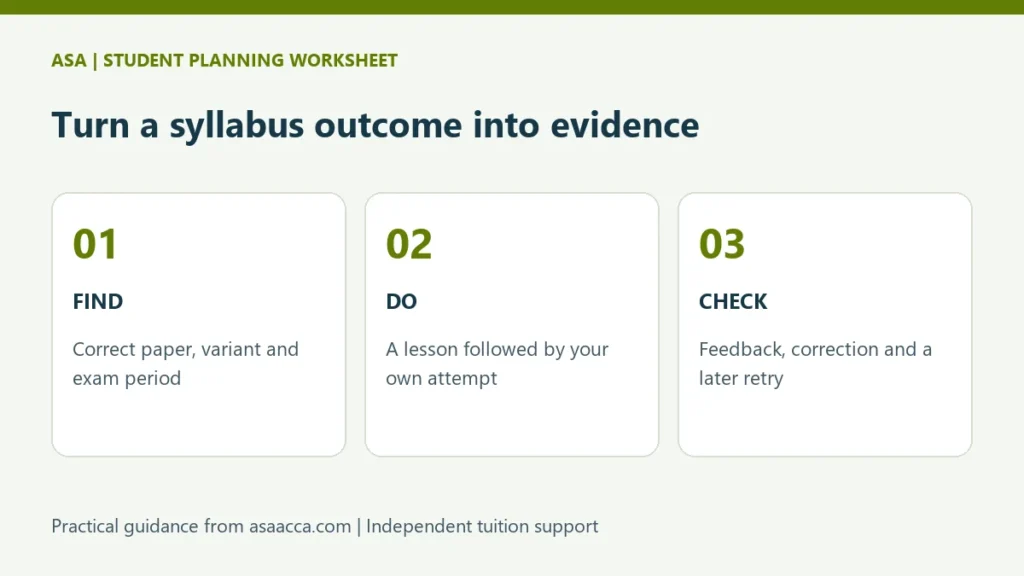
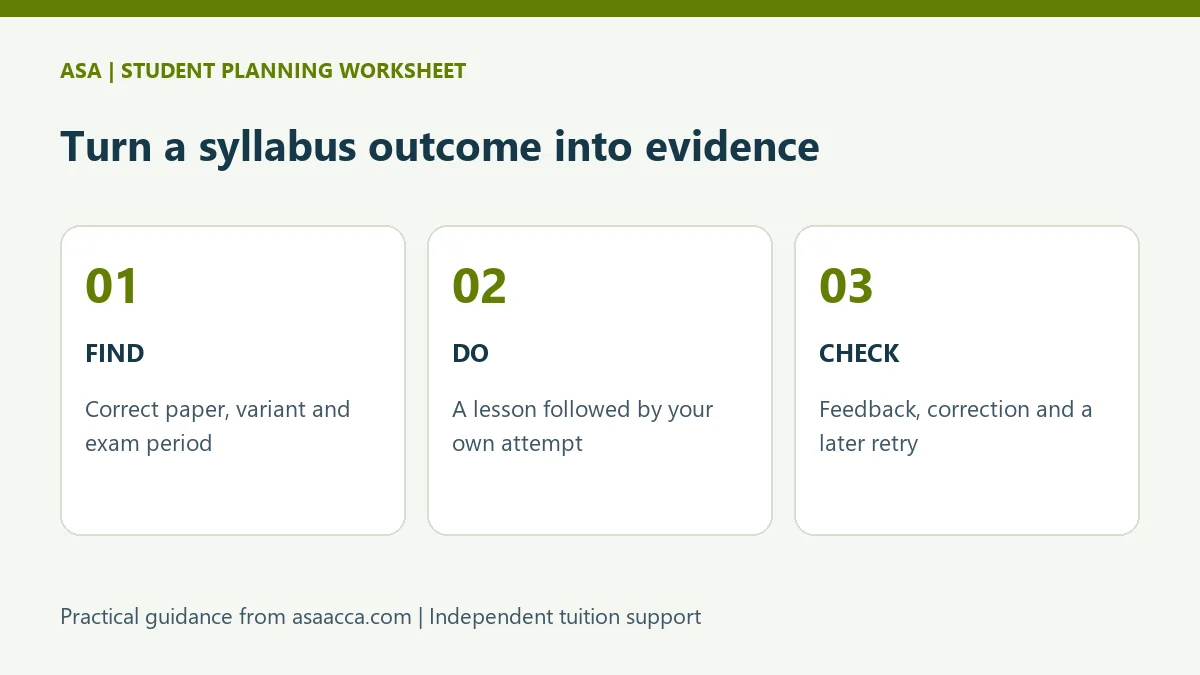
Use an ACCA syllabus and study guide to identify what you must be able to do, then connect each outcome to a lesson and an independent question attempt. A video playlist tells you what you watched; a syllabus-based record helps you see which skills you can demonstrate and which need more work.
Check the document before planning
Confirm the paper, variant where relevant, and examination period printed on the document. A search result or saved PDF may belong to a different year. This is particularly important when tax rules or qualification arrangements change. Use ACCA’s current study support resources to locate the appropriate paper information rather than treating an old download as permanent guidance.
Do not assume that a course called “ACCA” covers every paper or variant. Match the course description to the exact syllabus you intend to study. For a wider explanation of the qualification, start with What Is ACCA?; this article focuses on using a study guide in your weekly learning.
Read the action, not just the topic
Two outcomes can mention the same subject while asking you to do different things. Explaining an idea, calculating a figure and evaluating a decision require different evidence. Simply highlighting a heading does not show that you can perform the required task.
For example, after a lesson on a costing topic, you might explain the distinction between two cost categories, classify unfamiliar items and justify an ambiguous choice. This is an original illustration of study planning, not a reproduced ACCA question or a statement of a particular paper’s current examinable wording.
Build a five-column learning record
| Outcome reference | Learning task | Your evidence | Gap | Next review |
|---|---|---|---|---|
| Reference from your current guide | Read the relevant section and watch the lesson. | Explain the idea without copying notes. | Identify the step you cannot explain. | Set a date for a fresh attempt. |
| A related application outcome | Attempt an unfamiliar practice question. | Keep your workings and reasoning. | Distinguish knowledge errors from technique errors. | Retry after correcting the cause. |
Use your own references and tasks; the table is a template rather than an official assessment record. Avoid recording “complete” merely because a lesson has played to the end.
Review one small topic properly
- Identify the relevant outcome and read its scope.
- Study a focused lesson or chapter section.
- Close the solution and attempt a suitable question.
- Compare your reasoning with reliable feedback.
- Correct the error and schedule a later attempt without looking at the answer.
If you are following a tuition course, bring the specific gap to your tutor: the outcome reference, your attempt and the step you do not understand. This is more useful than asking for an entire chapter to be explained again.
Keep technical study and exam practice connected
ACCA’s Study Hub guidance explains the role of its technical learning material and the importance of familiarity with the computer-based exam environment. Check the resources relevant to your paper. An ASA practice activity is independent tuition support and should not be mistaken for an official ACCA examination.
Browse ASA’s teaching, demo and course options to connect your chosen paper with tuition. If you are planning from Pakistan, the ACCA in Pakistan overview adds local route and planning context. For a full attempt review, continue with how to review an ACCA mock exam.